 Toon Tone
Guess the Color: Train Your Eye With Cartoon Color Memory
"Guess the color" sounds easy until the reference disappears. Toon Tone turns that moment into a short daily game about hue, saturation, brightness, and cartoon memory.
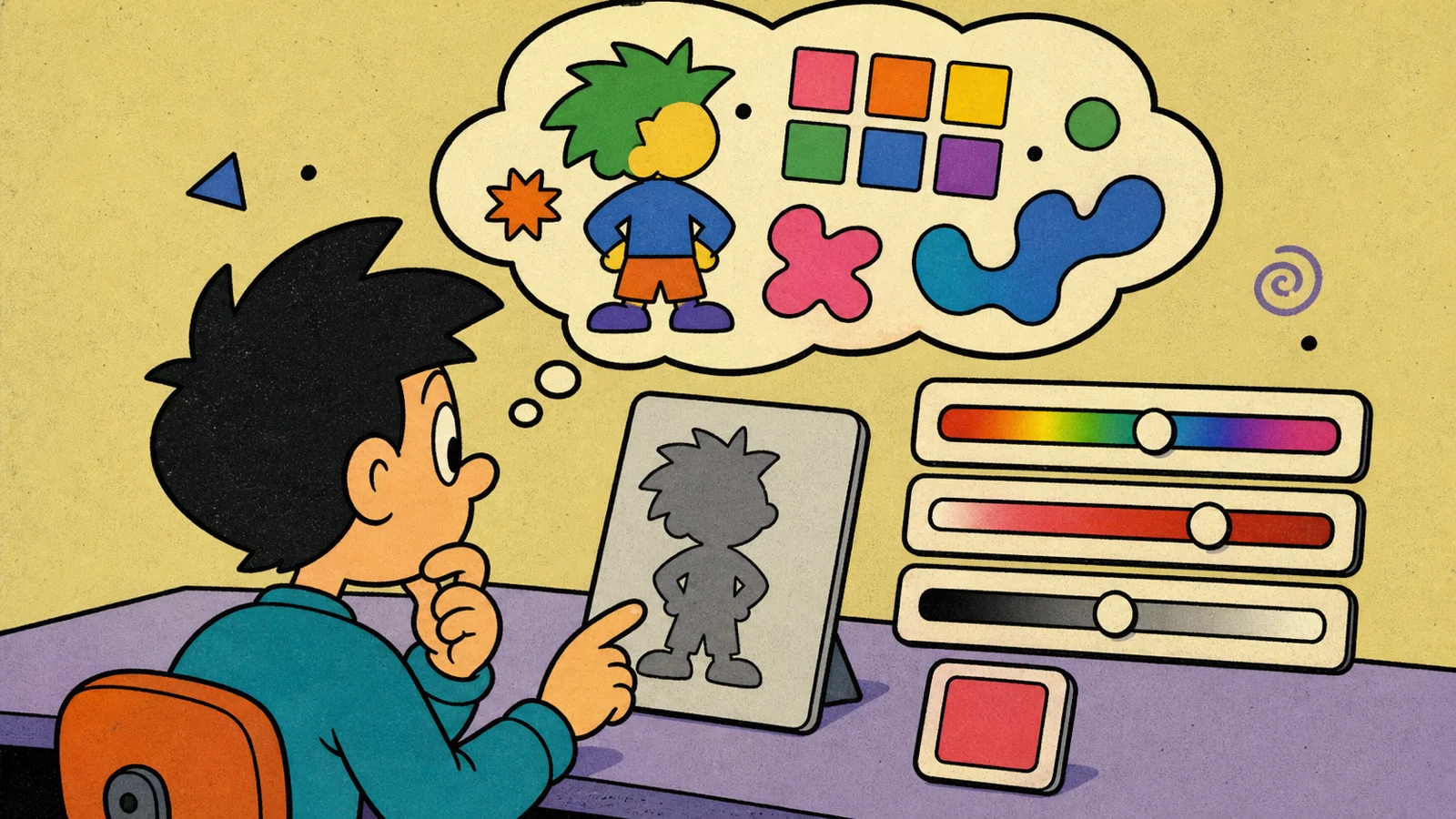
What does "guess the color" mean?
A guess-the-color challenge asks you to commit to a color before the answer is fully known. Some versions are visual: the target is hidden among nearby swatches or shown for only a moment. Other versions are memory-based: the game names a familiar thing and asks you to recreate its color from your own recall.
Toon Tone uses the memory-based format. The prompt might ask for a character's hair, shirt, cheeks, hat, eyes, or another recognizable design element. The challenge is not to search for the answer. It is to rebuild the shade you believe belongs there.
Sight-based guessing versus memory-based guessing
Sight-based games are mostly about comparison. You look at colors together and decide which one is closest. These games train discrimination: can you see the difference between two similar blues?
Memory-based games are about retrieval. The target is absent, so your brain fills the gap. These games train a different skill: can you bring back a specific color without seeing it beside your guess?
That is why Toon Tone feels closer to ear training than trivia. You already know the character. The question is whether your visual memory is accurate enough to produce the right tone.
Why guessing colors is harder than it looks
Memory makes colors more symbolic
Your brain tends to simplify familiar colors. A yellow character becomes "very yellow." A red shirt becomes "classic red." A blue jacket becomes "cartoon blue." The remembered category can be correct while the exact shade is wrong.
Hue is easier than brightness
Most players can identify the broad hue quickly. The larger mistakes often come from brightness. A color you remember as bright may actually sit in the middle range, especially if the original artwork uses outlines, shadows, or older broadcast palettes.
Saturation drifts toward expectation
Cartoon art often uses saturated colors, but not every character color is neon. If you push saturation too far, the guess may feel exciting but score poorly. If you pull it too low, the color becomes muddy and loses the character's identity.
How to practice a color guess
Use a repeatable order. First pick the hue family. Second decide whether the color is soft, clean, dull, or intense. Third decide whether it is closer to a dark costume color, a mid-tone base color, or a bright accent.
After the reveal, do not simply celebrate or complain about the score. Compare the error. If the original is darker, remember that. If your guess was too gray, raise your saturation expectation next time. The lesson from one round becomes the starting point for the next.
A useful habit is to say the correction in plain English: "I made that yellow too pale," "the real red was darker," or "that blue was closer to teal." Naming the miss turns a score into a memory cue.
How Toon Tone handles "what is the color of..." prompts
Many people search the web with phrases like "what is the color of" a character's part. Toon Tone turns that search pattern into a game prompt, but it avoids becoming a flat answer sheet. The answer is revealed after the player commits a guess.
That matters because the value is in the attempt. A direct answer tells you the color. A guess teaches you how your memory behaves.
Screen and environment tips
- Keep your screen brightness stable during a run.
- Avoid heavy color filters, night shift, or tinted display modes.
- Play under normal room light rather than in a very dark room.
- Take a short pause if every color starts looking too similar.
- If you have color vision deficiency, focus on tracking your own improvement rather than comparing raw scores.
When your first instinct is better
Many players make their best hue choice early, then talk themselves into a safer middle color. That can lower the score because memory-based color guessing rewards a clear first anchor. If you are unsure, keep the first hue and experiment with saturation or brightness instead of wandering across the color wheel.
Why cartoons make good color targets
Cartoon colors are deliberately designed. A character's hat, face, eyes, or jacket usually has a stable base color that fans have seen repeatedly. That makes the target recognizable but still specific enough to challenge memory.
Photographs are harder to score fairly because lighting and texture create many possible color samples. Toon Tone's character prompts keep the answer centered on a designed color rather than a random pixel.
Frequently asked questions
What is the best way to guess a color?
Start with hue, then adjust saturation, then brightness. This follows the way most people naturally describe color.
Does Toon Tone give direct cartoon color answers?
The game reveals the target after you submit. It is designed to make the guess meaningful before showing the answer.
Can color guessing improve with practice?
Yes. Focused comparison after each reveal can sharpen your sense of which color dimension you usually misjudge.
Is Toon Tone only for designers?
No. Designers may enjoy the precision, but the game is built for animation fans and casual players too.